
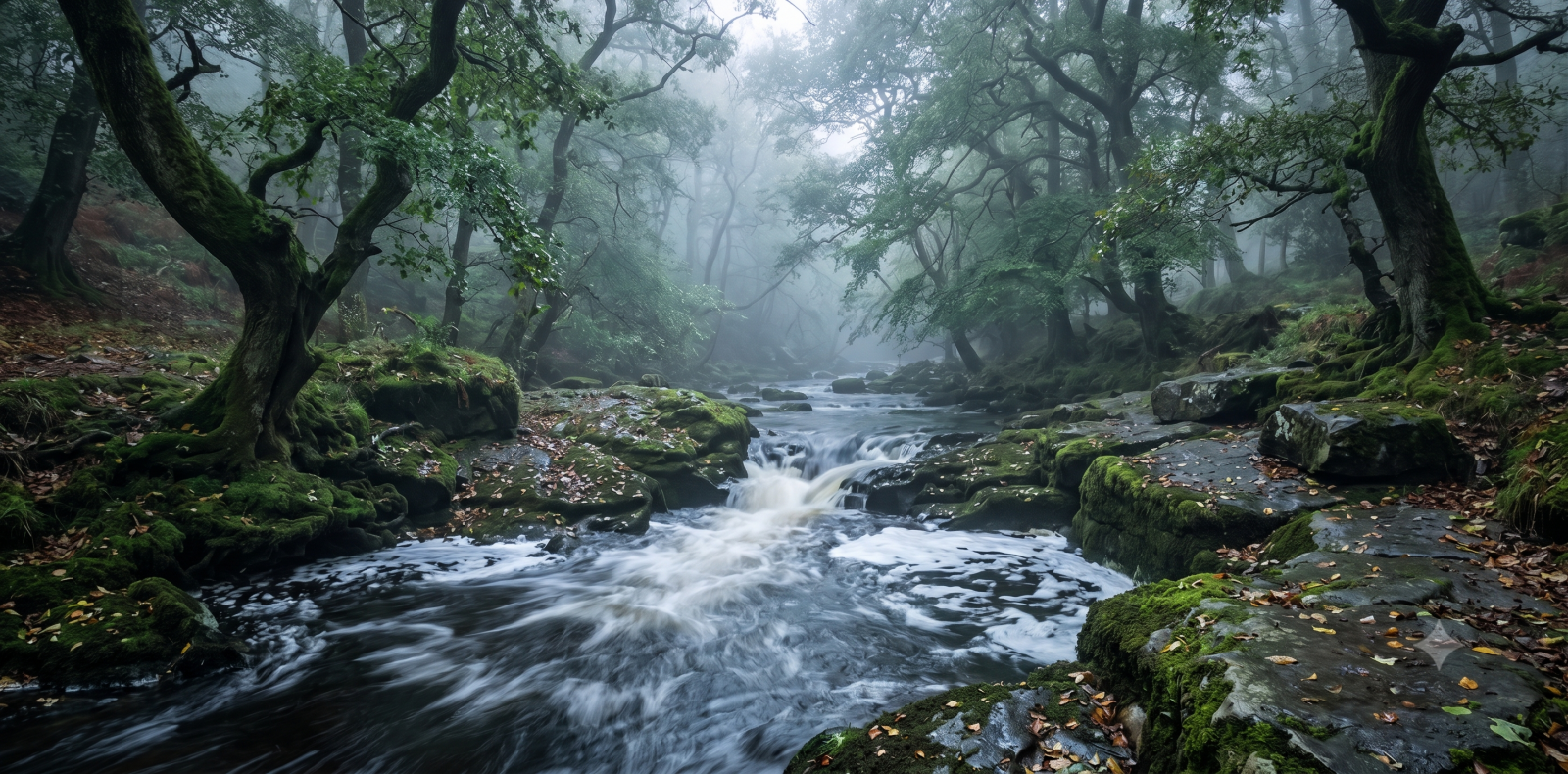
Flanked by ancient woodland, a slender channel of the River Wharfe near Bolton Abbey looks like a simple leap. But beneath the surface lies a subterranean chasm with a fierce reputation for danger.
To the casual walker traversing the pathways of the Bolton Abbey estate in North Yorkshire, the stretch of water known as The Strid appears entirely benign. It presents itself as a picturesque mountain stream, in places less than two metres wide, bubbling quietly through Strid Wood.
Yet local lore maintains that this unassuming channel is one of the most perilous traps on Earth, carrying a feared 100% fatality rate. For centuries, regional history has warned that anyone who slips or attempts to leap across its moss-slicked banks is instantly pulled into an invisible abyss, never to resurface alive.
The Vertical River: A Freak of Natural Engineering
The deceptive nature of The Strid is an anomaly of geological compression. Just a few hundred yards upstream, the River Wharfe behaves predictably. It is a wide, flat, and tranquil waterway stretching a generous 30 feet across, moving with a gentle current.
However, upon striking a massive limestone shelf, the entire topography undergoes a violent structural shift. Instead of narrowing in a typical bottleneck, the riverbed effectively turns on its side. The vast volume of the entire River Wharfe is abruptly forced, compressed, and funnelled into a deep, vertical trench.
This extreme compression gives rise to three distinct subterranean hazards:
- Extreme Velocity: The sudden narrowing creates a profound hydraulic pressure-cooker effect. Water is forced through the fissure at immense speed, generating violent, vortex-like undercurrents that act as a fluid vacuum.
- The Invisible Abyss: While the gap appears shallow from above, the channel plunges into deeply recessed, largely uncharted underwater caverns.
- The Limestone Overhangs: Over millennia, these ferocious hidden currents have hollowed out and undercut the limestone banks. A person falling into the water is not merely swept downstream. They are dragged horizontally beneath the very rocks they were standing on, making escape physically impossible.
Mythology of the Abyss: The Strid Kelpie

An environment so profoundly deceptive has naturally birthed dark folklore over the centuries. Historically, Dales communities spoke of the Strid Kelpie, a malevolent, shape-shifting aquatic spirit borrowed from Celtic mythology.
According to regional lore, the deadly white foam of the churning waters would occasionally manifest as a beautiful white stallion trotting along the misty banks to lure weary travellers. The moment a passerby attempted to touch or mount the creature, its magical hide would trap them, pulling them instantly into the deep currents.
In later centuries, the legend evolved into a grim omen. Locals believed a phantom white horse would rise from the frothing waters of the chasm at the precise moment the river claimed another human life.
Historical Archive: Myth vs. Reality
The dangers of the site have been documented for nearly a millennium, creating a fascinating intersection between romantic poetry and cold archival reality.
The Boy of Egremont
The earliest and most famous tragedy involved young William de Romilly, the son of Lady Alice de Romilly, who supposedly drowned here in 1152. Legend states he attempted to leap across the gap while leading a greyhound on a leash. The dog baulked at the edge, checking his momentum mid-air, and dragged him into the chasm. The tragedy inspired William Wordsworth’s famous poem, The Force of Prayer, which claims his grieving mother founded Bolton Priory in his memory.
The Historical Twist: Local estate archives reveal a surprising historical discrepancy. Young William’s name actually appears as a witness signature on the legal land deeds granting the property to the monks long after his alleged watery demise, proving he survived the jump and lived well into adulthood.
The 1998 Honeymoon Tragedy
In modern history, the danger remains starkly real. In August 1998, a young couple walking through Strid Wood on the second day of their honeymoon were swept into the fissure and killed. A sudden, catastrophic bout of heavy rainfall upstream had caused a rapid, vertical rise in the river level, catching them completely unawares.
The Golden Rule: Never Trust the Scenery
Today, the Bolton Abbey estate maintains stringent, highly visible warning signage along the woodland paths, instructing visitors to stay well back from the edge.
The limestone rocks flanking the water are perpetually slick with moisture, liverwort, and moss. While Strid Wood remains one of the most visually stunning walks in North Yorkshire, it serves as a stark reminder of the Dales’ most enduring rule of safety: never underestimate the hidden physics of the natural world.