
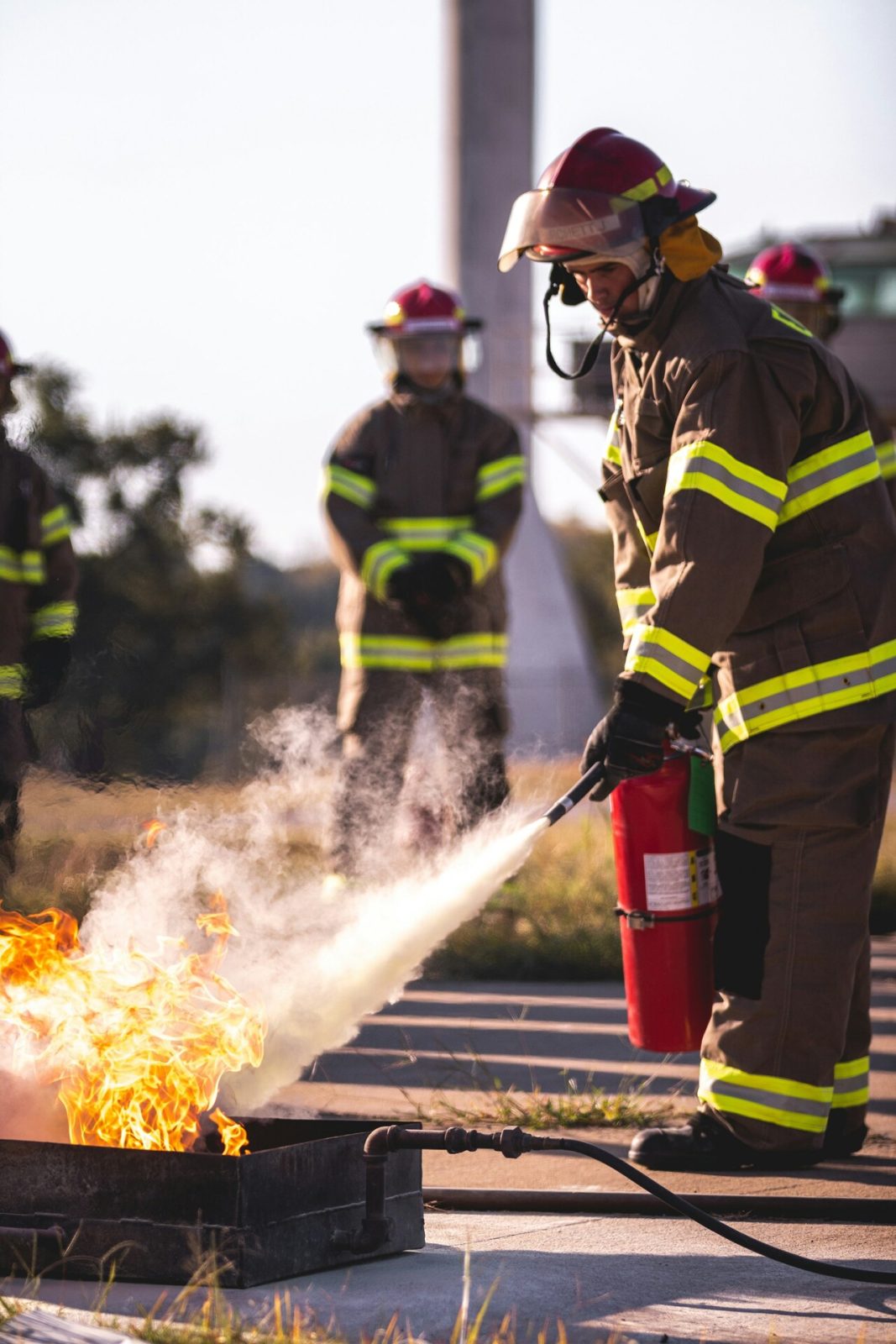
What many people found out from the recent and viral fire in Glasgow, when a vape shop caught alight and burnt down some historically significant buildings, was that not every fire extinguisher fights every fire. Electrical fires, like in that instance, are unique. But more than just being ineffective, they can exacerbate a fire. For water fire extinguishers used on the wrong hazard, it can turn a small, contained fire into something far more dangerous.
The classes water extinguishers were never designed for
UK fire safety recognises fire is focused on the material burning, not by where it happens to be.
- Class A is ordinary combustible solids such as wood, paper and textiles
- Class B is flammable liquids like petrol and solvents
- Class C covers flammable gases
- Class D covers burning metals
- Class F covers cooking fats and oils
- Electrical fire safety is marked with a spark symbol rather than a letter
So, ordinary water-jet extinguishers, which are quite common, are built for Class A only, while Class D fires need specialist dry powder alone – nothing else is considered safe on a burning metal. Every extinguisher sold in the UK has a coloured band under BS EN 3 that identifies super quickly, just a glance is needed, without properly reading the label. This is because fires are always an emergency, where people can struggle to read clearly.
- Red for water
- Cream for foam
- Blue for dry powder
- Black for CO2
- Yellow for wet chemical
So a red-banded extinguisher reaching for a chip-pan fire or a fault in a piece of plugged-in equipment is a very bad idea, and it’s something the colour coding is designed to prevent. Of course, it still requires some level of knowledge though, and this is why training is important.
There is also an exception: specialist water mist extinguishers use a very fine spray rather than a jet and are rated across a wider range of classes because the fine droplets behave differently to a solid stream of water. They’re very much their own product category that to some extent transcends the above classifications.
Why water specifically is dangerous on these fires
On live electrical equipment, water conducts electricity straight back along the jet to whoever is holding the extinguisher. This is why CO2 is the standard choice for electrical fires and dry powder is only considered acceptable below 1,000 volts. Water-based extinguishers, including foam, are excluded outright as making the situation all the more dangerous than it already is.
For burning cooking oil, the danger is a bit different but no less dangerous. Pouring water onto oil hot enough to be alight causes the water to flash to steam instantly beneath the fat. This throws burning oil upward and outward as an explosive fireball. It’s quite literally better to do nothing than to pour water on it.
London Fire Brigade responded to exactly this in Abbey Wood in August 2015, after a man asleep while cooking poured cold water onto a flaming chip pan. The pan exploded into a fireball that left him with severe burns and in a critical condition, while a fire officer afterwards described pouring water on a fat fire as “the most dangerous thing you can do.”
Wet chemical extinguishers are instead the right response, created to cool and seal burning fat rather than fling it, which is why Class F kitchens are fitted with them rather than water. Though of course, a simple fire blanket is also appropriate when the fire is small enough, as it can instantly suffocate the fire and deprive it of oxygen.
Getting extinguisher provision right is a legal duty, not a guess
Getting it right doesn’t just save lives but money, though none of this is left to a site’s own judgement under UK law. The Regulatory Reform (Fire Safety) Order 2005 asks the responsible person to equip premises with fire-fighting equipment “appropriate” to the risks actually present, assessed against the size of the site and its specific hazards rather than a generic minimum.
A kitchen, a workshop handling solvents, and an office full of paper and electrical equipment are three very different risk profiles, each need fire extinguisher types as no all-in-one exists. An extinguisher too large, though, can be confusing and unnecessary if those risks aren’t present, so it’s not a matter of buying more.
Most compliant sites carry more than one type, sited against the hazard each area actually presents rather than a flat one-per-floor rule. The practical audit is simple to run even without specialist knowledge: walk the site, note what would actually be burning if a fire started in each area, and check that whatever is mounted on the wall there is rated for it. Where cooking oil, live electrical equipment, flammable liquids or gas are present, a water extinguisher on its own is clearly not a compliant answer. But, then there is the training needed to ensure workers know the colour codes, so they can separate them apart, be it flammable liquid fires and water fire extinguishers.